About
Orthopedic Evaluations With a Whole-Body Lens
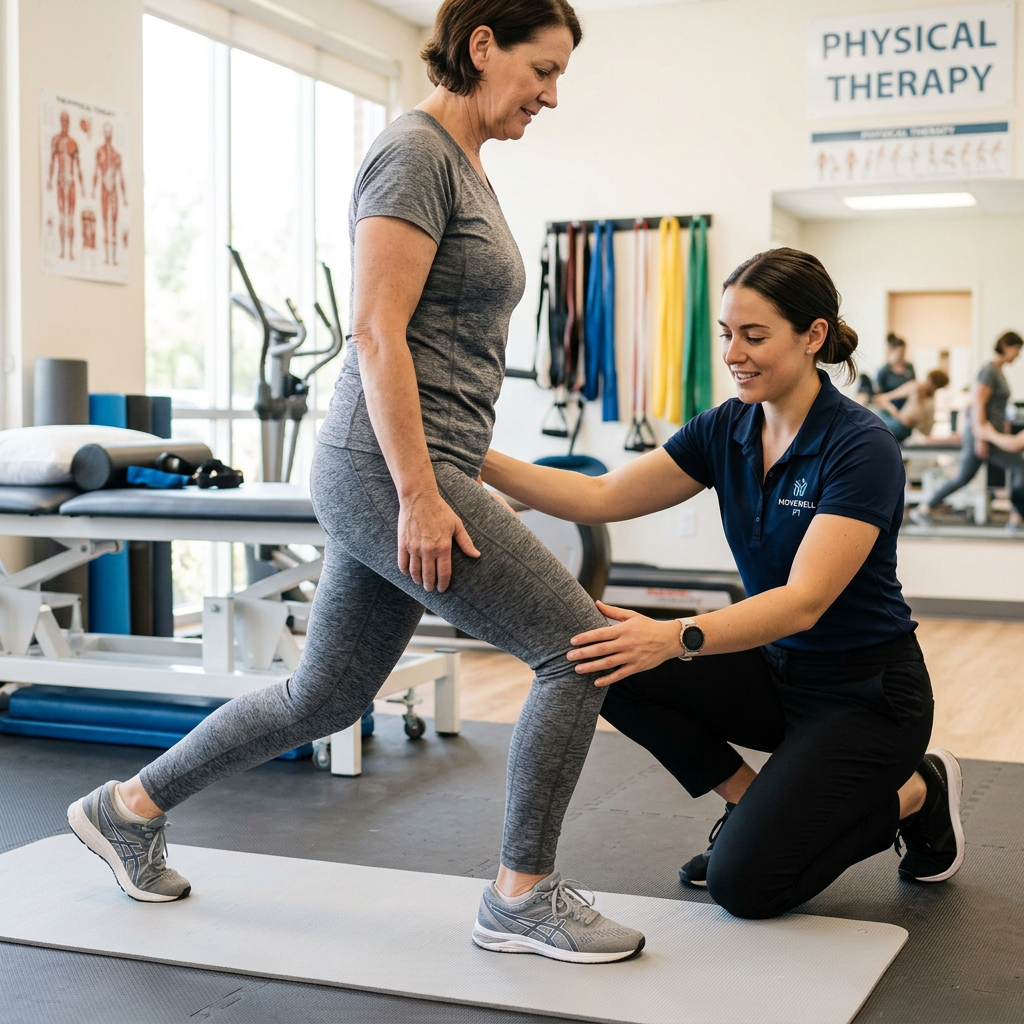
Knee pain is not always just about the knee. Shoulder pain is not always just about the shoulder.
Orthopedic evaluations look beyond the painful area to understand how your whole body is moving, loading, compensating, and coordinating. Pain in the neck, shoulder, back, hip, knee, ankle, or foot can be influenced by many factors — including strength, mobility, joint mechanics, breathing patterns, pressure management, spinal movement, core coordination, and how your body absorbs and transfers load.
Kat’s background as a pelvic health physical therapist brings an added layer to orthopedic care. The pelvic floor is part of a larger system that includes the diaphragm, deep core, spine, ribcage, hips, and nervous system. When one part of that system is not coordinating well, symptoms may show up somewhere else entirely.
For example, we may look at whether:
- Knee pain is being influenced by hip, foot, or spine mechanics
- Shoulder or neck pain is connected to ribcage mobility, breathing patterns, or core strategy
- Low back or hip pain is related to pressure management, bracing, or pelvic floor coordination
- Foot, ankle, or running-related pain is affected by how force travels through the body
- Your movement patterns change during lifting, squatting, walking, running, sports, dance, or daily activities
Your assessment is informed by a broader understanding of how the pelvic floor, core, spine, breath, and extremities work together.
Flowing Function offers orthopedic evaluations for concerns such as neck pain, shoulder pain, back pain, hip pain, knee pain, ankle and foot pain, running injuries, lifting discomfort, mobility limitations, and return-to-activity goals. Your evaluation is designed to help connect the dots — not just chase symptoms.
You do not need to have pelvic floor symptoms to work with a pelvic health physical therapist. Sometimes, that lens is exactly what helps make sense of pain elsewhere in the body.
 Flowing Function LLC